


From capuchin to cappuccino: the origin of the coffee icon
Although the cappuccino originally comes from Austria, it is particularly popular in Italy. The popular cappuccino goes back to the Viennese coffee specialty "Kapuziner", a mixture of mocha coffee and whipped cream. It was called Capuchin because the light brown color of the drink was reminiscent of the habit of a Capuchin monk. During the First World War, Austrian soldiers brought the popular drink with them to Italy, where Capuchin became cappuccino, a trivialization of the Italian word for hood "capuccio". The cappuccino is now popular and well-known all over the world, but no longer has much in common with the original capuchin. Today, it is made in the Italian style from espresso and milk foam.
No cappuccino after 12: Italy's unwritten coffee rule
If you not only want to prepare your cappuccino according to the Italian recipe, but also want to enjoy it the Italian way, avoid it after lunchtime. The rule in Italy is: no cappuccino after 12 noon. As it is considered a full-bodied drink, it is considered an insult to order a cappuccino in a restaurant after a full meal. This is because it signals to the chef that his meal was not enough. Milk is also sometimes considered a hindrance to digestion and is therefore avoided by some people after a meal.
Cappuccino, latte macchiato and latte: the small but subtle differences
Before we take a closer look at the cappuccino cup, we first need to clarify what sets cappuccino apart from other specialty coffees such as latte or latte macchiato. Although the ingredients of the three coffee specialties are almost identical, they differ significantly in taste, preparation and appearance.
- The cappuccino consists of 1/3 espresso and 2/3 lightly frothed, warm milk. The espresso is first poured into a bulbous cappuccino cup. The milk foam is then added, creating the characteristic appearance of the cappuccino and making the special latte style possible.
- A latte macchiato is not served in a cup, but in a glass and consists of three equal layers. First, a solid milk foam is poured into the glass, then the espresso is carefully poured through the foam. This creates the three layers of milk, espresso and milk foam.
- Unlike the other two specialty coffees, a latte is not made with espresso, but with coffee. Equal parts coffee and milk are mixed in a larger cup for approx. 360 ml.
Of course, different cups are needed for the different specialty coffees in order to achieve the optimum consistency and perfect taste. In contrast to latte, which is served in a large coffee cup cappuccino is traditionally served in a relatively small, bulbous cup. We explain what makes the cappuccino cup unique!
How big is a cappuccino cup?
The size, height and diameter set the cappuccino cups apart from other cup shapes. Thanks to the special size features, the cappuccino can be prepared and served perfectly.
A classic cappuccino cup usually has a capacity of at least 130 ml to a maximum of 200 ml and is therefore slightly smaller than other coffee cups. This smaller size ensures that the ratio of espresso to milk and milk foam in the cappuccino can be perfectly maintained. With a height of 5 to 7 cm, the cups are also rather low and fit easily under all espresso machines.
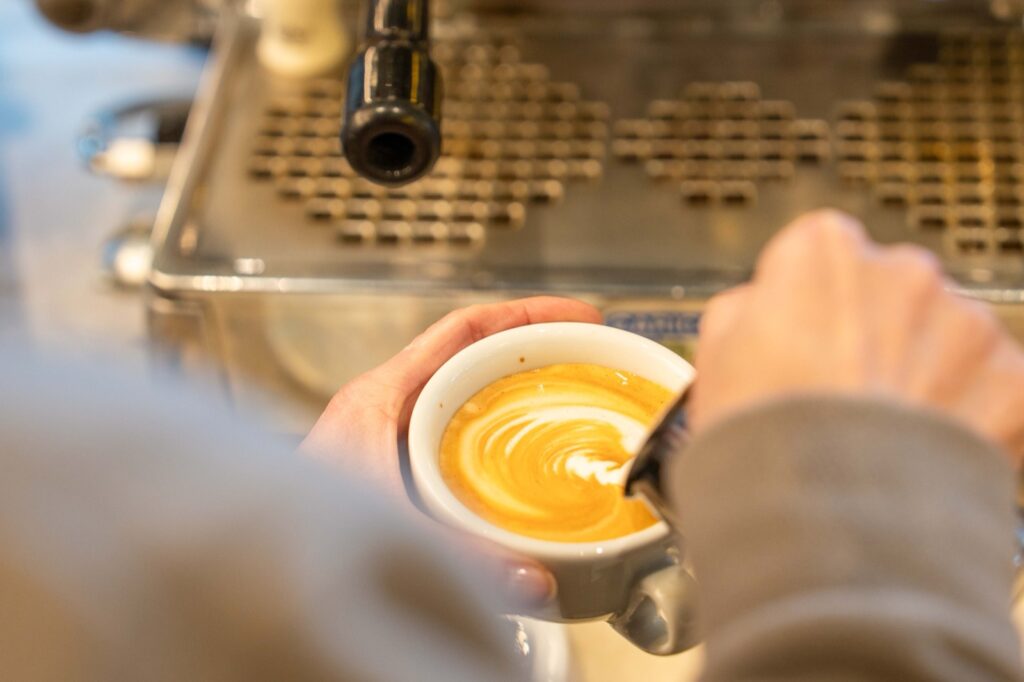
The diameter, on the other hand, is comparatively large at around 6 to 9 cm to allow the frothed milk to be poured in more slowly. This gives you enough time to conjure up impressive latte art patterns in the milk foam.
The perfect cappuccino cup: form, function and enjoyment combined
The shape plays an important role in choosing the right cup. If you drink your coffee in the traditional Italian way, it is best to drink it from an Italian cappuccino cup. These are usually very bulbous and round. This creates an optimal surface on which the milk foam and espresso meet and the different aromas can develop optimally.
Although the thickness of the cup wall does not play a significant role in the taste of the cappuccino, it can have a strong influence on the mouthfeel when drinking. At Espresso Perfetto , we offer cappuccino cups made from thick-walled porcelain. This shape is preferred by many customers and offers a perfect drinking experience. This is because the thick walls optimally retain the heat of the coffee so that you can take your time to enjoy your cappuccino in peace. At the same time, your hands are protected from the heat when holding the cup.
Ceramic or porcelain: what material is the cappuccino cup made of?
In contrast to shape and size, the material of the cups is relatively variable. The classic cappuccino cup is made of thick-walled porcelain. The heat of the coffee can be stored well in it and the cappuccino is kept warm for a long time. Porcelain is also very robust and durable, so you can enjoy your cappuccino cup for a long time. Ceramic is also a popular material in the production of cappuccino cups. In contrast to light, elegant porcelain, ceramic has a somewhat coarser appearance and is pleasantly heavy in the hand. The choice of material therefore depends primarily on your own furnishing style and taste.
Traditionally, the design of the cappuccino cup is rather simple and elegant, often completely white to draw the focus to the drink. But don't worry - even those who prefer a more colorful look will find what they are looking for at Espresso Perfetto . Whether green, pink or black, with or without print: you are guaranteed to find the right cup for your taste here.

Cappuccino cups from Espresso Perfetto
At Espresso Perfetto you will find a large selection of cappuccino cups in various designs. Thick-walled, bulbous and always equipped with a matching saucer, we offer you cups made of high-quality porcelain from various suppliers. Whether classic white, colorful or with the motifs of your favorite brand - with the right cup, your cappuccino tastes twice as delicious!
A cup rarely comes alone: beautiful sets of saucer and saucer
Traditionally, a set of cappuccino cups always consists of perfectly matching top cups and saucers. This is not only aesthetically pleasing, but also very practical. The saucer protects the table and tablecloth from the heat of the top cup or from stains caused by milk foam running down.
It also serves as a practical and stylish tray for sugar, spoons and napkins. The matching saucer for your cappuccino cup is of course always included!

Rocket Cup, Flat White, White
The original price was: €10.507,00€The current price is: €7.00.
Nuova Point Cappuccino Cup, White, Milano

Universal Caffè Cup, Black

Nuova Point Cappuccino Cup, Brown, Palermo

Nuova Point Cappuccino Cup, Red, Palermo

Nuova Point Cappuccino Cup, Black, Palermo