




Setting the grind size correctly – it's not rocket science!
Depending on which coffee drink you want and how you prepare it, a different grind size is required. There are all kinds of grind sizes, from coarse to fine.
For example, a French press requires a coarse grind similar to sea salt. This prevents the coffee from passing through the filter. A medium to fine grind is recommended for a manual filter or stovetop coffee maker. Ideally, the ground coffee should resemble fine Caribbean sand.
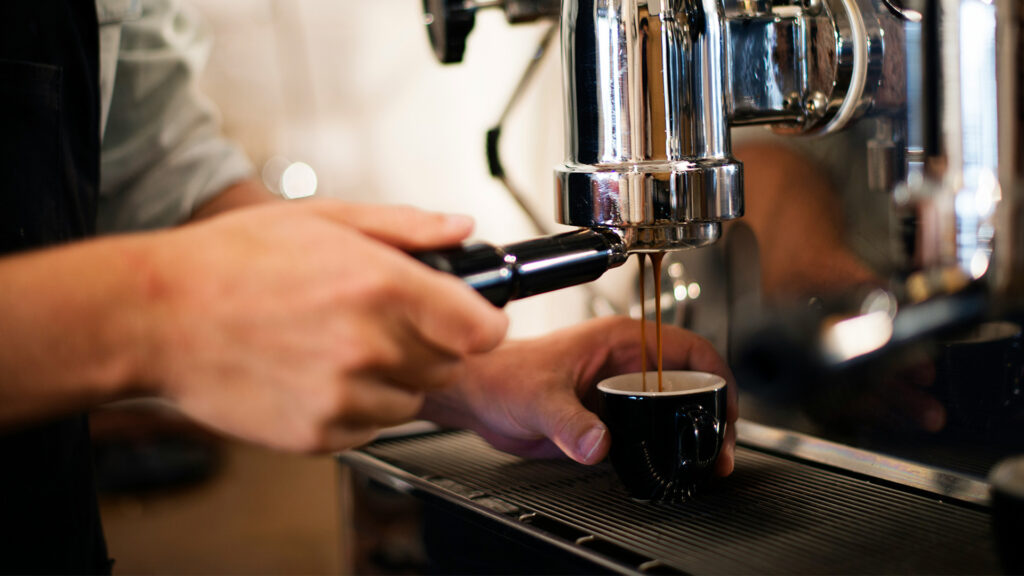
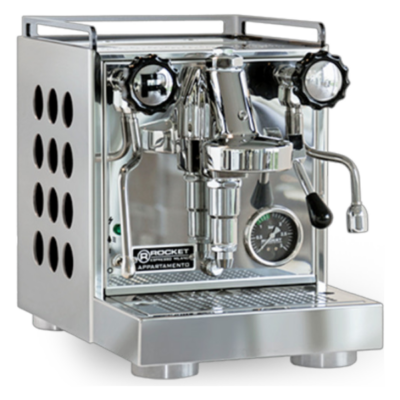
Now we come to the queen of preparation methods: the portafilter machine.
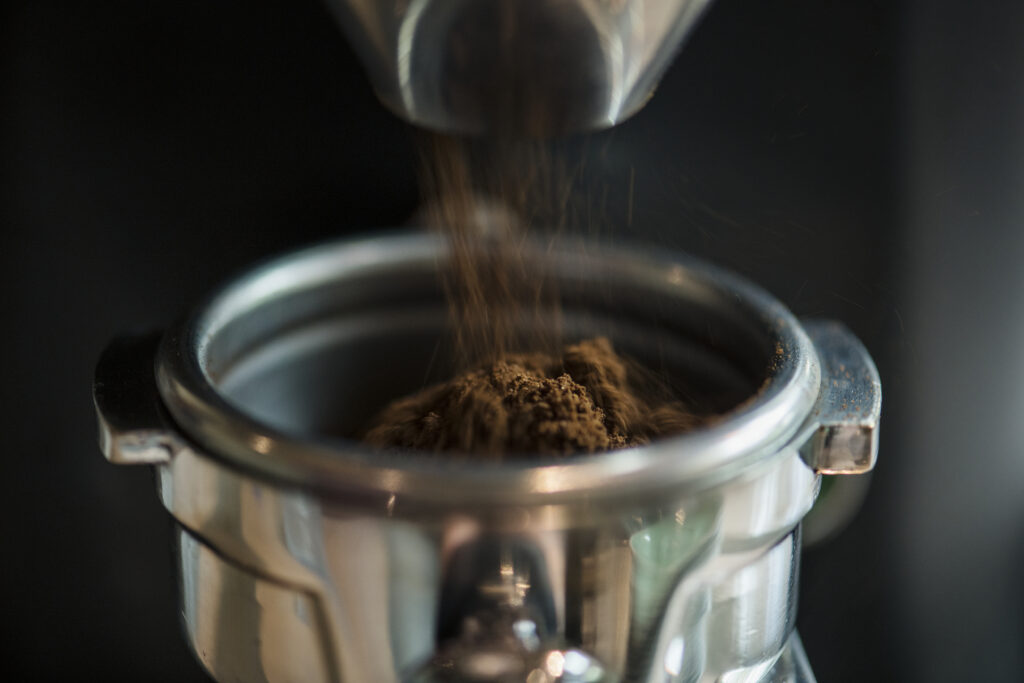
The portafilter machine is only satisfied with the finest of the finest. Even Caribbean sand is too coarse-grained for it. If the ground coffee feels like powdered sugar, then the portafilter machine is satisfied.
Of course, there are other preparation methods, and to help you determine which grind size is best suited to your preparation method, you can simply refer to our EP grind size scale.
EP grind scale for every coffee preparation method
Grinding degree - what is it?
For coffee lovers, there is one important detail that is often overlooked: the grind. But what exactly do we mean by "grind"? It is the fineness or coarseness with which coffee beans are ground. The consistency of your coffee powder directly determines how the water interacts with the coffee and flows through the powder. This in turn directly influences the taste, aroma and strength of your coffee. It is very important to understand why we should always grind coffee fresh. Ground coffee loses its valuable flavors very quickly to the environment, in fact within just 15 minutes about 60% of its flavors are lost. It is therefore advisable to grind coffee beans just before brewing to ensure that they can develop their full flavor.
And what actually happens when coffee beans are ground? Simply put, the surface area of the coffee bean is increased. The finer the beans are ground, the larger the surface area that is exposed to the hot water. This allows for easier and faster extraction of the substances from the coffee, which is ideal for making espresso, where the contact time of water and ground coffee should be rather short. In contrast, coarsely ground coffee grounds have a comparatively small surface area. This means that the aromas are only slowly released from the coffee beans. The contact time between water and ground coffee should therefore be longer, for example when making coffee with a French press.
Setting the grind size correctly – it's not rocket science!


Why is the right grind so important for your coffee drink?
The grind setting determines how fine or coarse the coffee grounds will be, and the texture of your coffee powder in turn determines how the water flows through the coffee grounds. This directly influences the taste, aroma, and strength of your coffee.
It is also important to understand why we should always grind coffee fresh. Pre-ground coffee bought in a packet loses its valuable aromas to the environment very quickly. After just 15 minutes, around 60% of the aromas are lost. It is therefore advisable to grind coffee beans just before preparation to ensure that they can develop their full aroma.
How can the degree of grinding be influenced?
In the world of coffee, many factors influence the ideal grind of beans, and finding the perfect balance can be a challenge.
Here are some key factors to consider when fine-tuning the grind:
The type of coffee: Different types of coffee have different characteristics, and these can influence how finely or coarsely they should be ground. For example, certain varieties taste best as a dark espresso roast, which means that they should be ground rather finely.
The degree of roasting: The degree of roasting is closely related to the type of coffee. A coffee with low acidity, such as our Fairtrade organic coffee, is roasted to a medium roast. This longer roast reduces bitterness and increases acidity, but as Fairtrade coffee is naturally low in acidity, the result is a perfectly balanced coffee. The ideal grind for this coffee would be medium to coarse.
The extraction duration of the preparation method: The duration of the extraction also plays a role in determining the correct grind. A coarse grind results in fewer dissolved bitter substances, caffeine and aromas, which is desirable with a longer extraction time. With a fine grind, however, these elements dissolve more quickly, which is ideal for shorter extraction times.
With a portafilter machine, for example, you should adjust the grind so that you are between 25 and 30 seconds during extraction.
The pressure: When tamping, i.e. when you press the coffee powder into the Portafilter , you should not apply too much pressure, but not too little either - a pressure of 15 to 20 kg is just right. Remember: the finer the powder and the more firmly it has been pressed into the Portafilter , the slower the water will flow through. You want to avoid "channeling" - these are small channels in the powder through which the water shoots. This can really damage the taste of your coffee. And make sure you don't tap the Portafilter with the tamper after tamping. This could break the filter cake and the water would preferentially flow through this crack. The rest of the coffee will then not be extracted properly - and you definitely want to avoid that.
Humidity: The humidity can also influence the degree of grinding. If the humidity increases, you should grind coarser, and if it decreases, you should grind finer.
Additional factors influencing the degree of grinding
Although the type of coffee preparation and the type of coffee are often cited as the main determinants of the grind size, there are other parameters that can play a role. For example, the hardness of the water used can influence the taste and aroma of the coffee, which in turn influences the choice of grind size.
But the most important element in this equation is your personal taste. The recommended grind settings are only general guidelines and may vary depending on your individual preferences. Perhaps you prefer a strong, robust coffee, which is best achieved with a finer grind. Or maybe you prefer a smoother, more subtle flavor, which is achieved with a coarser grind. It is therefore worth experimenting a little and adjusting the grind to suit your personal taste. This will ensure that you get the perfect coffee that meets your expectations.
What happens if the grind is wrong?
Perfect coffee requires more than just a cup and some boiling water. It is a masterful balancing act based on the right grind. But what happens when the balance is disturbed?
If your coffee is ground too finely and brewed too long, we enter the bitter land of over-extraction. Here, over 22% of the aromas are extracted from the coffee beans, resulting in an unpleasant taste as the bitter components are also "extracted". A typical example is the use of a French press with a fine grind and long brewing time. On the other hand, too coarse a grind and too short a brewing time can lead to under-extraction . In this case, less than 18% of the aromas are released from the coffee beans, resulting in a flat and watery taste. A typical case would be the use of a portafilter machine with a coarse grind.
Now you may be asking yourself: is there a golden rule for the grind? There actually is! The finer the grind, the shorter the contact time of the coffee powder with the water should be and vice versa. But as with every rule, there are exceptions, so feel free to experiment a little!
The most important thing is to grind your coffee fresh. Not only does freshly ground coffee taste better, you can also adjust the grind for your specific brewing method.
A variety of flavors thanks to the right grind
The grind size not only affects the brew ratio, but also the extraction time and the quality of your espresso. You might think that the more flavors we extract from the coffee beans, the better the coffee will taste.
However, the Specialty Coffee Association (SCA) recommends that only 18% to 22% of the more than 1,000 flavors should be extracted for the best taste experience. It is even impossible to extract more than 30% of the flavors.
These findings bring us back to the importance of the grind size. This is because the extraction time—how long the water is in contact with the coffee—depends directly on the grind size. Controlling the grind size allows you to release the ideal amount of aromas and thus bring out the true flavor of your coffee. This closes the circle: from grind size to extraction to perfect coffee enjoyment.
The golden rule for the right grind size
The finer the grind, the shorter the contact time between the coffee powder and the water should be, and vice versa. But as with any rule, there are exceptions, so feel free to experiment a little!
The most important thing is to grind your coffee fresh. Not only does freshly ground coffee taste better, but you can also adjust the grind size to suit your specific brewing method.

The ideal grind with the right coffee grinder
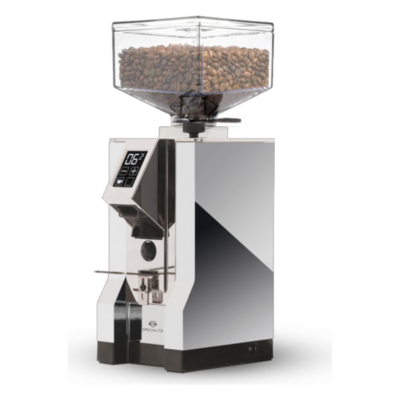
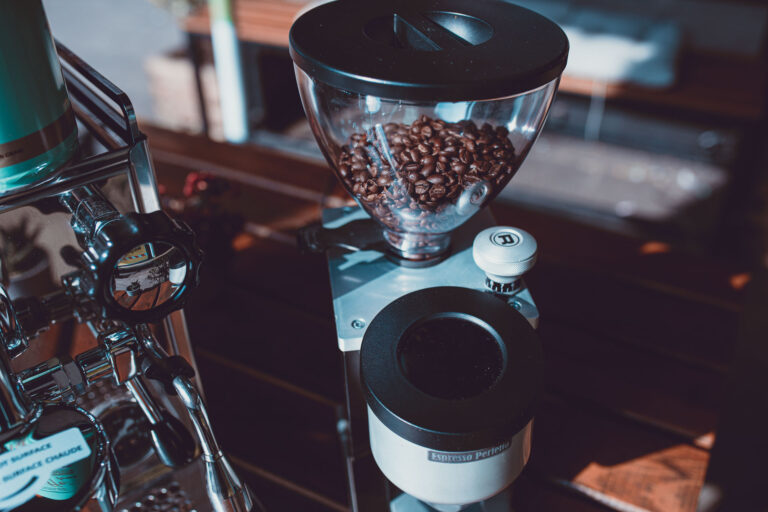
The perfect coffee starts with the perfect grind - and the key to a good brewing result is an even grind. However, if your ground coffee contains a mixture of larger and smaller particles, also known as 'boulders' and 'fines', these will also be extracted at different rates. While the larger particles will under-extract, the smaller ones will over-extract, which can ultimately lead to unpredictable extraction rates and affect the taste of your coffee. This is because the particles that are too small create a strong bitter note and the particles that are too large create a sour taste. It is therefore important to have a high-quality coffee grinder to help minimize this problem. There are different types of coffee grinders on the market: conical grinders, flat burr grinders and blade grinders. However, blade grinders tend to grind the coffee and produce a very non-uniform particle size. For an optimal taste, (electric) coffee grinders with conical or disk grinders are therefore recommended. These grinders grind the beans between two disks or a cone and the grinder wall, resulting in a more even grind. A first-class electric coffee grinder for home baristas is, for example, the ECM S Automatic 64.
From Eureka to Mahlkönig:
Which espresso grinder is suitable?
If your ground coffee contains a mixture of larger and smaller particles, also known as "boulders" and "fines," these will be extracted at different rates. While the larger particles will be under-extracted, the smaller ones will be over-extracted, ultimately leading to unpredictable extraction rates and affecting the taste of your coffee. The particles that are too small produce a strong bitter note, and the particles that are too large produce a sour taste. Therefore, it is important to have a high-quality coffee grinder that helps minimize this problem.
There are various types of coffee grinders on the market. Some are equipped with a conical burr grinder, for example, and some with a disc burr grinder. If you would like to learn more about this, we have prepared a separate blog post on this topic for you.
Best brands for espresso grinders
Here are the most popular brands of espresso grinders from our online store:
Our recommendations for espresso grinders under €900
Nothing found.
With the Fiorenzato Evo V2, you are choosing a particularly powerful espresso grinder: equipped with 58 mm flat grinding discs and a stepless grind adjustment as well as the elegant CapSense display, it delivers precise and consistent grinding performance. The robust cast aluminum housing not only makes it technically superior, but also visually appealing. Ideal for anyone who values high quality, durability, and a stylish appearance.
Nothing found.
This coffee grinder combines grinding precision with ease of use. With 55 mm hardened steel grinding discs, the innovative "Burrs Distance Detection System" for precise adjustment, and a 2.8" touch display with programmable grinding profiles, you can achieve consistently first-class coffee quality every time. Thanks to "Silent Technology," the coffee grinder runs particularly quietly—perfect for secretly surprising your loved ones with an espresso in the morning. The ACE system minimizes clumping and static buildup for clean dosing. In short: if you don't want to compromise in your home coffee lab, this grinder is the perfect choice.
Nothing found.
The solid cast aluminum housing, a 3.5" touchscreen display, and a powerful 350 W motor clearly demonstrate its ambitions. Equipped with a 64 mm disc grinder, timer function, operation in "flush mode" or "barista mode," and a low-noise grinding process, it sets standards for secret professionals. In short: if you want finely ground coffee and stylish technology, treat yourself to a HeyCafe Buddy—you'll be friends for life.
With Espresso Perfetto to the perfect espresso
We wouldn't be Espresso Perfetto if we didn't help you make the absolutely perfect espresso. That's why we've put together a few essential tips to help you find the ideal grind:
- Proceed with caution: Only ever change the grind of your coffee grinder in stages. Even small adjustments can make a big difference!
- Watch patiently: The perfect espresso flows smoothly and evenly into the cup. Pay attention to the color changes during brewing - from dark brown to hazelnut brown to a light blonde.
- The crema is the star: a beautiful, medium-brown crema, which is still visible after a few minutes, shows you that you have set the grind correctly.
Fine-tuning for gourmets: the optimum grind for incomparable coffee enjoyment
The magic of perfect coffee starts with the right grind. It protects you from watery or bitter coffee and prevents over- or under-extraction. Above all, however, it allows all the aromas to fully develop and takes the taste of your coffee to a new level. If you have any further questions or need more information, please do not hesitate to contact us. We at Espresso Perfetto are always ready to help you with your coffee needs.