



Espresso  beans,Coffee beans...
What is the difference?Power one an espresso with coffee beans or are coffee beans only for coffee? And why do some talk espresso beans? Are the not also coffee beans? End with the speculation and misunderstandings – we clarify !
Back to botany: the coffee plant
When the time is right, the coffee plant produces shiny, deep red coffee cherries, and inside these cherries is a seed, also known as the coffee bean.
From a purely botanical point of view, the basis of every coffee drink, whether espresso, latte macchiato, or filter coffee, is the coffee bean. This is because there is no such thing as a coffee plant that grows espresso beans—or, even more curiously, "cappuccino beans."
Whether espresso beans or coffee beans: further processing is the deciding factor
After the coffee cherries are harvested, the beans are separated from the pulp before export. There are various ways of doing this:
sun drying
In this natural method, the coffee cherries are traditionally dried in the sun over a very long period of time, after which the skin and pulp can be easily removed. This drying process gives the coffee bean a fruity, tart aroma.


Honey Processed
A drying process also takes place here, but in this case the outer shell or skin of the coffee cherry is removed. However, the pulp remains on the bean. During the drying process, the pulp becomes sticky and resembles the consistency of honey, hence the name "honey processed." After drying, the pulp is also removed here. Later, the beans develop a sweet flavor.
wet mill
In a wet mill, the husk and pulp are mechanically removed from the bean through controlled friction. The beans retain their slimy sugar coating (mucilage) and are then transferred to fermentation tanks, where this coating is enzymatically dissolved over several hours.
Once fermentation is complete, the beans are thoroughly washed with water until they are completely free of fruit residue. They are then usually dried on raised beds until the optimum residual moisture content is reached.

What happens after drying?
After a resting period, which ensures that the coffee beans are stable and suitable for storage, the parchment skin is removed from the bean, depending on the drying method. Only then does the bean take on the shape we are familiar with. The green coffee is then sorted according to size, density, color, and defects. Sorting machines are used for this purpose—only high-quality lots are additionally sorted by hand. In this raw form, it can be packed into bags and, unlike roasted beans, can be stored for months.
Espresso bean or coffee bean? Roasting is crucial.
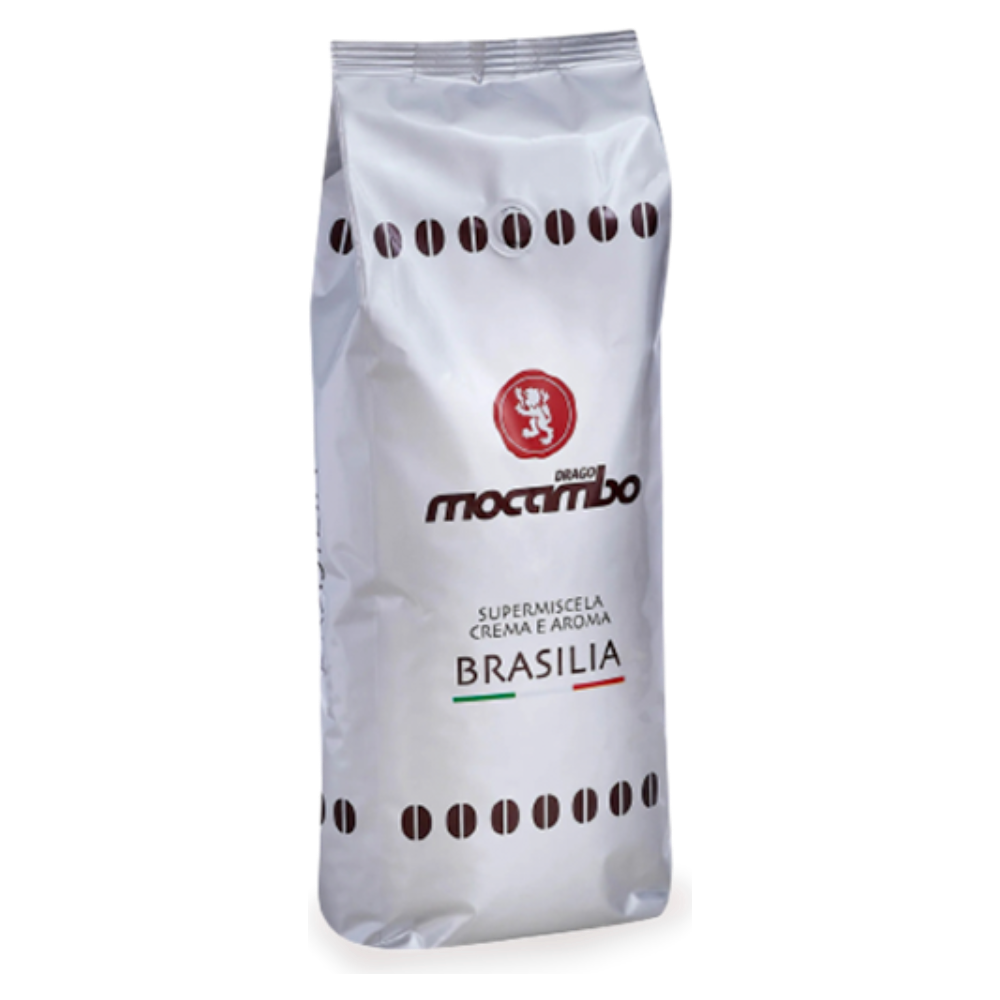
This is precisely where the main difference lies: a coffee bean becomes an espresso bean when, unlike other roasts, it is roasted relatively long and dark. If you want to produce espresso beans during roasting, the beans are heated to 180–230 °C. This causes the water to evaporate, the sugar to caramelize, acids, oils, and aromatic substances to develop, and chlorogenic acid and caffeine to be reduced. If you are sensitive to coffee but have no problems with espresso, the latter could be one of the reasons.
The right blend also works wonders, although this is of course a matter of taste. Those who prefer a mild effect often tend to choose 100% Arabica. However, many espresso purists prefer a blend with Robusta, which adds a full-bodied chocolate note to the whole.
Since Robusta is not often used for filter coffee, this bean could be described as a true espresso bean. Arabica beans, on the other hand, are used universally.
TIP:
You can find the ideal blends and roasts for an unbeatable espresso at Espresso Perfetto the online shop. Whether you prefer 100% Arabica, a refined blend with Robusta, or decaffeinated coffee, with Espresso Perfetto , you will always make the right choice for your espresso preparation.
You decide whether espresso beans or coffee beans
Whether a particular coffee bean is a good espresso bean is determined not only by the roast and the variety, but also by you during the espresso preparation process.
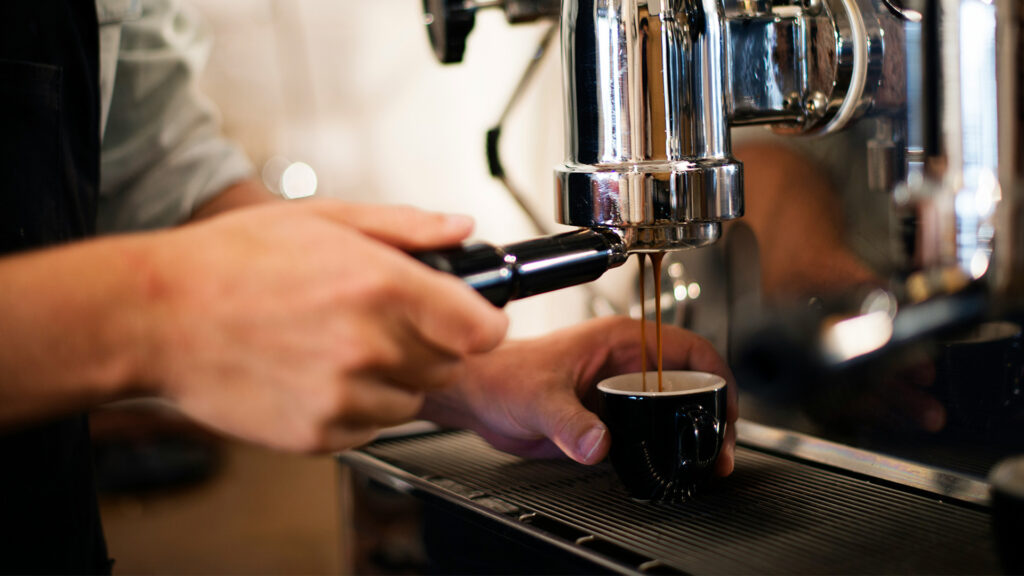
For example, you need a completely different brewing pressure for a good espresso than for a cup of coffee. An espresso requires a temperature of around 90–96 °C. Water that is too hot burns the beans, while water that is too cold results in an under-extracted, sour taste.
It is also important to tamp evenly and create a compact coffee cake so that the water runs evenly through the filter later and does not create channeling, as this can affect the extraction time. The optimal extraction time is approximately 25–30 seconds. Here, too, incorrect preparation can result in a weak, sour, or bitter taste.
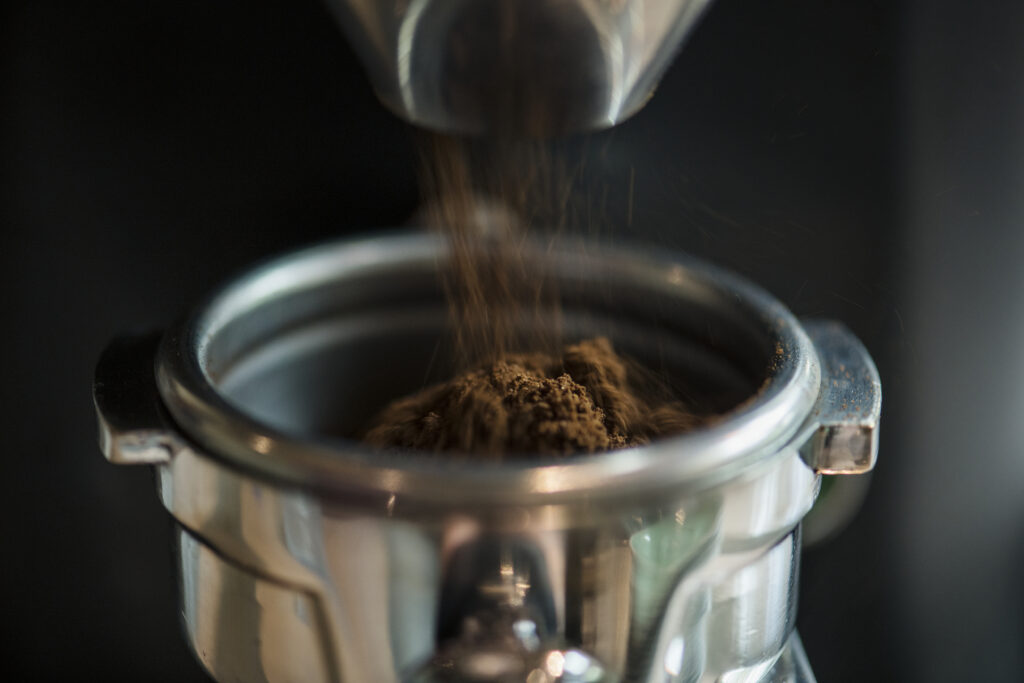
The same precision applies to the grind size. If it is too coarse, the extraction time will be too short; if the coffee powder is too fine, it will clog the filter and impede the flow of water.
Die richtige Espressozubereitung mit Espresso Perfetto –wir erklären, wie es geht. Hast Du erst einmal die richtige Kaffeebohne für Deinen Espresso gefunden, ist das die halbe Miete. Und die andere Hälfte lernst Du in unseren Blogs „Bodenloser Siebträger“, „Mahlgrad richtig einstellen“ und „saurer Kaffee“. Hier findest Du Tipps und Tricks, die Dir dabei helfen, den optimalen Geschmack aus Deinen Espressobohnen herauszuholen.