






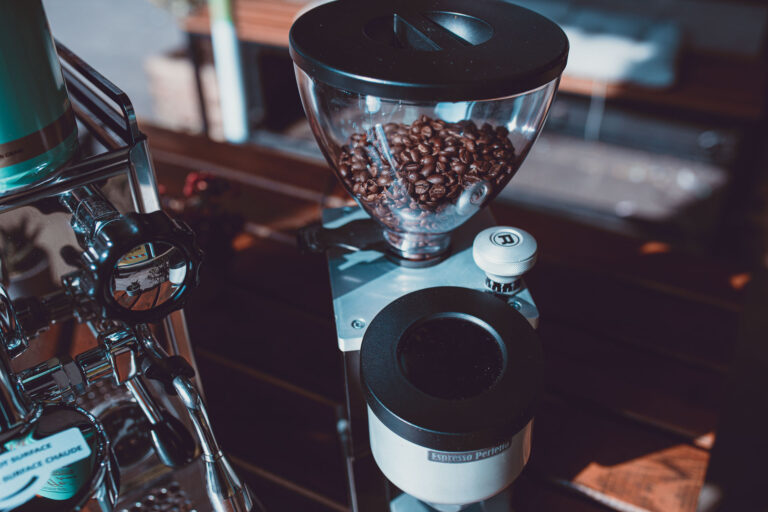
How do I clean my coffee grinder?
Cleaning your coffee grinder – Espresso Perfetto . Coffee grinders must be cleaned regularly, as rancid coffee oils impair the grinding result and negatively affect the taste. Cleaning methods: 1) Manual cleaning: Wash the funnel with soapy water, clean the grinder with a cleaning brush, and clean the outside with a damp cloth or ECM polishing cloth. 2) Granule cleaning: Put 35-40g of Puly Grind Crystals in the empty bean container, grind on a medium grind setting, then grind 20g of coffee beans and dispose of them. Do NOT combine the granules with water, do NOT put them in damp grinders, do NOT use them for grinders with an integrated brewing unit. Rice is NOT recommended for cleaning: Rice damages plastic parts and grinding mechanisms, rice starch sticks to the grinder, and may void the warranty. Cleaning intervals: Brush after each use, granules monthly (oily beans every 2-3 weeks), manual cleaning every 1-2 months. Repair service at Espresso Perfetto Erkrath (Heinrich-Hertz-Straße 27a, Mon-Fri 8 a.m.-5 p.m.) or by mail. Contact: 0211 9053887, shop@espressoperfetto.de.
Quick Answer:
Clean your coffee grinder regularly to remove rancid coffee oils and ensure consistent grinding results. Use a cleaning brush after each use, perform a granule cleaning (e.g., with Puly Grind Crystals) once a month, and manually clean the hopper and burrs every 1–2 months. Do not use rice—it can damage the burrs.
Oil can go rancid, including the oil that seeps out of the coffee beans during grinding and sticks to the various parts of the coffee grinder. In addition, this undrinkable oil mixes with the fresh beans and gives the coffee an unpleasant taste. In addition to affecting the taste, residual oils from the coffee beans also impact the grinder’s performance, as they eventually cause the grinding disc to become clogged. This makes it impossible to produce a uniform, fine espresso grind, and as a result, you won’t be able to make a good espresso.
If you clean your coffee grinder regularly, you'll not only be rewarded with great-tasting coffee, but also with a longer lifespan for your grinder.
Instructions for Cleaning Your Coffee Grinder, with Product Recommendations
There are several ways to clean your coffee grinder. Before we explain the different cleaning methods, here is a list of items that are essential for cleaning coffee grinders. It also includes some product recommendations from our experts.
To clean your coffee grinder, you'll need:
- A microfiber cloth
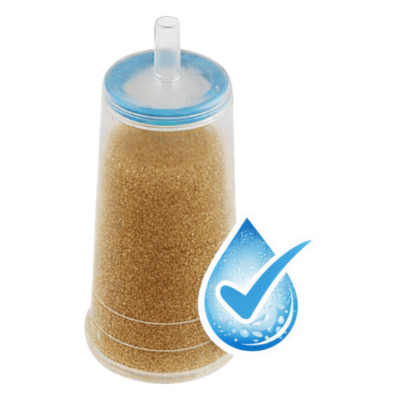
- Puly Grind Crystals for cleaning with granules
- A mild detergent
- A suction device (e.g., a vacuum cleaner)
- A soft cleaning brush
- Warm water
We'll explain how to best clean the hopper and grinder by hand, as well as how to clean the granules:
Cleaning the Hopper and Grinding Mechanism in an Electric Coffee Grinder
Before you begin disassembling the coffee grinder and removing the hopper and grinder, make sure the power cord has been unplugged.
Start by vacuuming the individual components to remove the first layer of dry, loose coffee grounds. This step makes the subsequent wet cleaning much easier and cleaner.
The funnel can be washed by hand with warm soapy water. Any soap residue must also be rinsed off with warm water before drying the funnel with a microfiber cloth.
Clean the grinding mechanisms with a soft cleaning brush. More stubborn residue can be wiped away in specific areas with a microfiber cloth.
The exterior of the coffee grinder can also be cleaned with a damp cloth. If the exterior housing is made of stainless steel, you can restore your coffee grinder’s shine using the ECM polishing cloth.
Cleaning a Coffee Grinder with Granules
The bean container must be completely empty before using the cleaning granules. If there are small bean residues in the container, they must first be ground down until no more come out.
Puly Grind Crystals, for example, is a recommended coffee granule. This product is available Espresso Perfetto online store.
Here's how it works:
Place about 35–40 g of Puly Grind into the empty bean hopper and grind the entire amount of granules to a medium grind. This process releases coffee oils, fat residues, and fine coffee dust. Then empty the drip tray and brush out the grinding chamber with a brush.
Now add a small amount (about 20 g) of coffee beans to the grinder and grind them completely as well. Be sure to discard the resulting coffee grounds.
Don'ts for cleaning with granules:
- Do not mix with water
- Don't put it in damp mills
- Do not use with grinders that have a built-in brewing unit (grinder only!)
Can I clean my coffee grinder with rice?
Almost everyone has rice at home, so you might be interested in this cleaning method. However, cleaning your coffee grinder with rice grains could damage it.
Why You Should Choose Pet Food Pellets Over Rice:
You may be familiar with the method of placing a wet cell phone in rice. It works the same way for oily residue in a coffee grinder. Rice absorbs not only moisture but also oils, ensuring that the grinding mechanism in the coffee grinder produces a consistent espresso powder again. However, there’s a big BUT when it comes to cleaning with rice.
There are three reasons why cleaning with rice is not recommended:
- Rice is harder than coffee and, due to its coarse grind, can damage plastic parts, cause the grinding mechanisms to wear out faster and more severely, and overload the motors.
- When rice is finely ground, rice starch is released. If this starch comes into contact with moisture, it can clump together and cause the coffee grinder to become clogged from the inside. Rice starch is even harder to remove than coffee grounds and the oil from coffee beans.
- For these reasons, depending on the manufacturer, the coffee grinder's warranty may be voided if foreign materials such as rice are used for cleaning.
Conclusion on the rice method: Cleaning granules like Puly Grind Crystals are better suited for cleaning the coffee grinder!
How often should I clean my coffee grinder?
A coffee grinder doesn't need to be thoroughly cleaned every day—it's perfectly sufficient to remove the coffee grounds from the grinder with a cleaning brush after each use.
With average use, it’s a good idea to clean the coffee grounds about once a month, and you should manually clean the hopper and grinder with a cleaning brush and microfiber cloth every 1–2 months.
Cleaning the grounds is recommended only for particularly oily coffee beans, about every 2–3 weeks.
Even after cleaning, is your coffee grinder still not grinding well?
If you've already tried all the cleaning steps and the grind is still not satisfactory, you can bring your coffee grinder to us in Erkrath for maintenance. If you live farther away, you can also mail your espresso grinder to our workshop in Erkrath.
We service and repair your coffee grinder and give you tips on how to keep it in good working order for years to come.
Visit us in person at Heinrich-Hertz-Straße 27a in Erkrath, Monday–Friday from 8 a.m. to 5 p.m. If you live farther away, you can also reach our technical support team by phone at 0211 9053887. If we are unable to answer your call due to high call volume, we sincerely apologize and ask that you contact us via email at shop@espressoperfetto.de. We will address your request as soon as possible.