




Decaf – a low-caffeine alternative for coffee lovers
Decaffeinated coffee—also known as decaf —is the ideal alternative for anyone who enjoys the aroma and taste of coffee but wants to reduce their caffeine intake. The decaffeination process is key to the quality of the coffee: Gentle methods, such as the CO₂ or Swiss water processes, preserve the aromas, while chemical processes can leave residues and affect the taste.
There are many reasons to switch to decaffeinated coffee:
- Sleep Problems After Drinking Coffee in the Evening
- High blood pressure or other cardiovascular diseases
- Unpleasant physical symptoms after consuming caffeine
- A sensitive stomach that reacts to acid
- Pregnancy and/or breastfeeding
Nevertheless, it is important to consider how the coffee beans were decaffeinated, as the various methods affect the quality of the beans to varying degrees.
How are coffee beans decaffeinated?
Not all decaf is the same, because various methods can be used to decaffeinate coffee beans. Most commonly, these include the carbon dioxide method, the Swiss Water process, or chemical methods.
You'll now learn exactly how each of these processes works and what that might mean for your purchasing decision.
Carbon Dioxide Process / CO₂ Process
In this process, the coffee beans are first soaked in water until they swell and their pores open. The CO₂ then passes through the coffee beans under high pressure and at a temperature of about 31 °C. During this process, the CO₂ is in a so-called supercritical state, which has the advantage of extracting mainly the caffeine while preserving other chemical components, such as flavor compounds. Finally, the CO₂-containing caffeine is directed into a separate container, where the caffeine and CO₂ are separated from one another. This allows the CO₂ to be reused repeatedly.
Advantages:
- Flavors are preserved
- No chemical residues
- Excellent flavor
Swiss Water Process
This natural process, which originated in Switzerland, does not use any chemicals. The unroasted coffee beans are first soaked in warm water, which extracts both caffeine and flavor compounds. At the same time, a coffee extract is produced in which the caffeine and flavor compounds are separated from one another. The extracted portion containing the flavors is crucial for the next step: the next batch of coffee beans, which is soaked in this extract, does not lose its flavors, but only the caffeine.
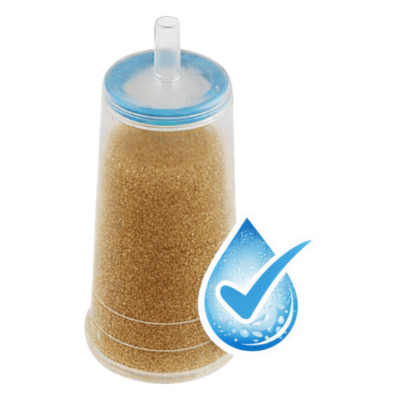
While this isn’t osmosis per se—it is certainly inspired by osmosis. That’s because the concentration of flavors in the extract is so high that it prevents any further release of flavors from the swollen coffee beans. However, there is no caffeine in the extract—thanks to the concentration gradient, the caffeine can escape from the coffee beans and mix into the extract. Later, the caffeine must be removed from the extract again. This is done using a special activated carbon filter through which the water is passed. The “flavored water” is then used for the next batch of beans, creating a cycle that preserves the flavors.
Advantages:
- 100% chemical-free
- Natural Process
- Suitable for organic coffee
Chemical Processes
In this process, the coffee beans are pretreated with water and then processed with solvents such as dichloromethane or ethyl acetate, which extract the caffeine. In short: The caffeine is chemically dissolved and then removed using steam.
This method is particularly inexpensive and requires little effort. However, chemical residues are usually detected in the beans, and the flavors lose some of their intensity.
Advantage: inexpensive, fast, and efficient.
Disadvantage: usually leaves residue, and the taste can be more strongly affected.
A Comparison of Decaf Methods
| Procedure | Advantages | Taste Quality |
|---|---|---|
| Carbon Dioxide Process / CO₂ Process | Flavors are preserved; no chemical residues; high-quality taste; CO₂ is reusable | Very aromatic |
| Swiss Water Process | 100% chemical-free; natural process; suitable for organic coffee; resource-efficient cycle | Natural & Gentle |
| Chemical Processes | Inexpensive; fast and efficient process | Less aromatic |
Note: "Caffeine-free" and "decaffeinated" are not the same thing
Decaffeinated or "decaf" beans contain trace amounts of caffeine. After the decaffeination process, less than 0.1% of the caffeine remains in these coffee beans. This is precisely why "caffeine-free" is not an accurate description.
Is there such a thing as decaf coffee?
To put it simply: It is not yet possible to produce decaffeinated coffee—that is, coffee beans with 0% caffeine. There are certainly decaffeinated alternatives, such as grain coffee—but these are not real coffee made from coffee beans.
Caffè Decaffeinato – Decaffeinated Coffee Beans from Espresso Perfetto
Our decaffeinated coffee beans are organic, which means that no chemical processes were used to remove the caffeine. Our own-brand Caffè Decaffeinato from Espresso Perfetto a blend of 90% Arabica and 10% Robusta beans, sourced exclusively from organic and fair-trade farms in Central America and South Asia. The medium roast offers a rich aroma and is ideal for all coffee lovers who want to reduce their caffeine intake without sacrificing the intense flavor of coffee.

Espresso Perfetto Decaffeinated 500g
* Savings compared to our previous price.